

Total Lunar Eclipse March 3, 2026 – The Blood Moon Guide
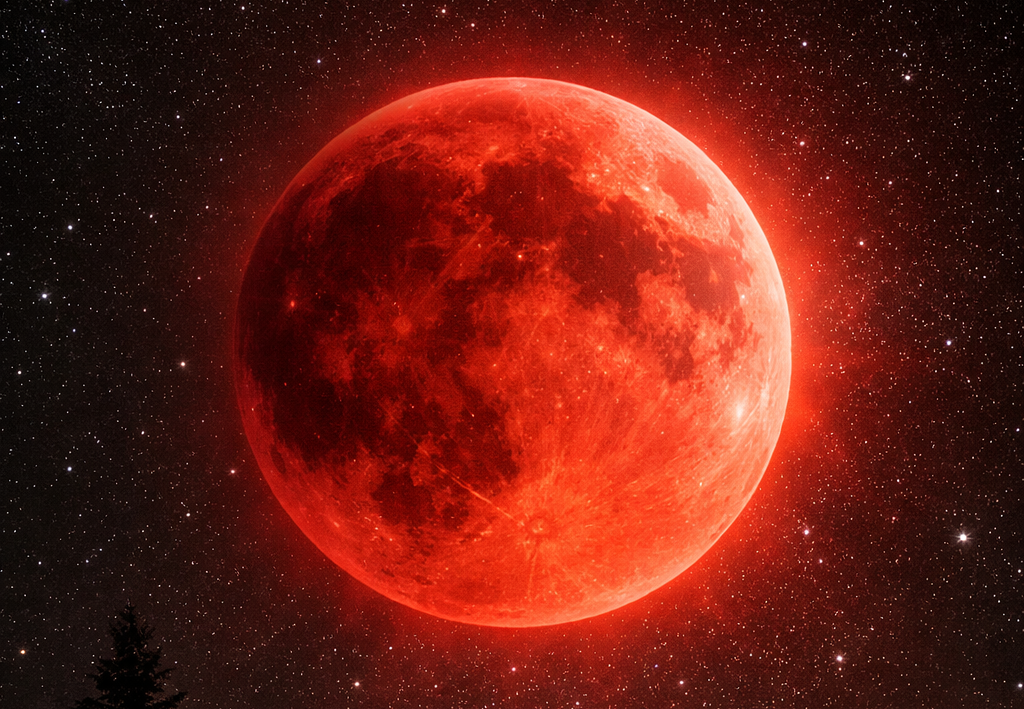
Total Lunar Eclipse 2026: The Blood Moon Is Here Tonight
Step outside before dawn this Tuesday. The Moon full, low, and glowing will slowly turn deep crimson as Earth’s shadow swallows it whole.
Tonight’s total lunar eclipse on March 3, 2026 is the final total eclipse until December 31, 2028. After this, the sky stays eclipse-quiet for nearly three years.
This event is the third in a rare trilogy of total lunar eclipses (March 2025, September 2025, and now March 2026). Back-to-back-to-back total eclipses are uncommon, making tonight especially significant.
Whether you're a skywatcher or just eclipse-curious, here’s everything you need to know.
Quick Facts at a Glance
Date: March 3, 2026
Type: Total Lunar Eclipse (Blood Moon)
Total Duration: 5 hours 39 minutes
Totality Duration: 58 minutes
March Full Moon Name: Worm Moon
Next Total Lunar Eclipse: December 31, 2028
What Is a Total Lunar Eclipse?
A total lunar eclipse occurs when the Sun, Earth, and Moon align perfectly with Earth directly between the Sun and Moon.
Earth casts two shadows:
Penumbra (lighter outer shadow)
Umbra (dark inner shadow)
During totality, the Moon moves completely into the umbra.
Why Does the Moon Turn Red?
The red color comes from Earth’s atmosphere.
When sunlight passes through Earth’s atmosphere, blue light scatters away (the same reason sunsets look orange). The remaining red light bends around Earth and illuminates the Moon.
In simple words:
Every sunrise and sunset happening on Earth at that moment is projected onto the Moon.
The exact shade depends on atmospheric conditions like dust, pollution, or volcanic particles.
Exact Timing: March 3, 2026 Lunar Eclipse
Key Phases (US Eastern Time – EST)
Penumbral begins: 3:44 AM
Partial begins: 4:50 AM
Totality begins: 6:03 AM
Totality ends: 7:01 AM
Partial ends: 8:03 AM
Penumbral ends: 9:23 AM
Totality lasts nearly 58 minutes.
Special Viewing Note (US East Coast)
The Moon will be setting in the west while the Sun rises in the east a rare optical effect called a selenelion.
Where Can You See the Eclipse?
Best Visibility (Full Eclipse)
Eastern Australia
Japan
South Korea
Philippines
Indonesia
Much of East & Southeast Asia
Good Visibility (Totality Visible)
Most of North America
Canada
United States
Central America
Western South America
Mostly Missed
Most of Europe
Much of Africa
Why This Eclipse Is Special
This is the final eclipse in a rare “trilogy” of three consecutive total lunar eclipses:
March 2025
September 2025
March 3, 2026
After this, the next total lunar eclipse won’t occur until December 31, 2028 a New Year’s Eve Blood Moon.
There will be a partial lunar eclipse on August 28, 2026, but it won’t be as dramatic.
How to Watch the Lunar Eclipse 7 Viewing Tips
1. No telescope needed to be safe to view with naked eyes.
2. Use binoculars for better detail.
3. Find a dark location away from city lights.
4. Watch the partial phase; it's visually stunning.
5. For photos: Use tripod + ISO 400–1600 during totality.
6. Dress warmly (early March mornings are cold).
7. If cloudy, watch live streams from NASA or space websites.
The Science Behind Lunar Eclipses
Lunar eclipses help scientists study Earth’s atmosphere.
By measuring how dark or red the Moon appears, scientists can analyze:
Dust levels
Atmospheric particles
Volcanic impact
Air clarity
After major volcanic eruptions, eclipses appear much darker.
In a way, Earth’s shadow becomes a scientific measuring tool.
Frequently Asked Questions (FAQs)
1. Is it safe to look at a lunar eclipse?
Yes. Unlike solar eclipses, lunar eclipses are completely safe to view with naked eyes. 2. What time does the Blood Moon start?
Totality begins at 6:03 AM EST and ends at 7:01 AM EST.
3. Why is it called the Blood Moon?
Because the Moon turns red during totality due to atmospheric refraction.
4. Why is it called the Worm Moon?
“Worm Moon” is the traditional name for the March full moon, marking the arrival of spring when earthworms emerge.
5. When is the next total lunar eclipse?
December 31, 2028.
Leave a Reply
Your email address will not be published. Required fields are marked *